Author’s note: This essay combines personal reflection, published evidence, and composite scenes drawn from surgical training.
At some point, while preparing a PowerPoint presentation for a conference on advocacy in urology, one I had been eagerly anticipating, I fell asleep at the keyboard.
The sentence stopped. My finger remained on the key.
mmmmmmmmmmmmmmmmmmmmmmmmmmmmmmmmmm
I woke to find the letter stretching across the slide, the computer dutifully recording the moment consciousness had left my body. My hand had continued doing the closest thing it could manage to work.
In Irish folklore, the fetch is the spectral double of someone still living. It resembles the person closely enough to be mistaken for them, but its appearance was traditionally understood as an omen that death was near.
The post-call resident meets her fetch sometime around sunrise.
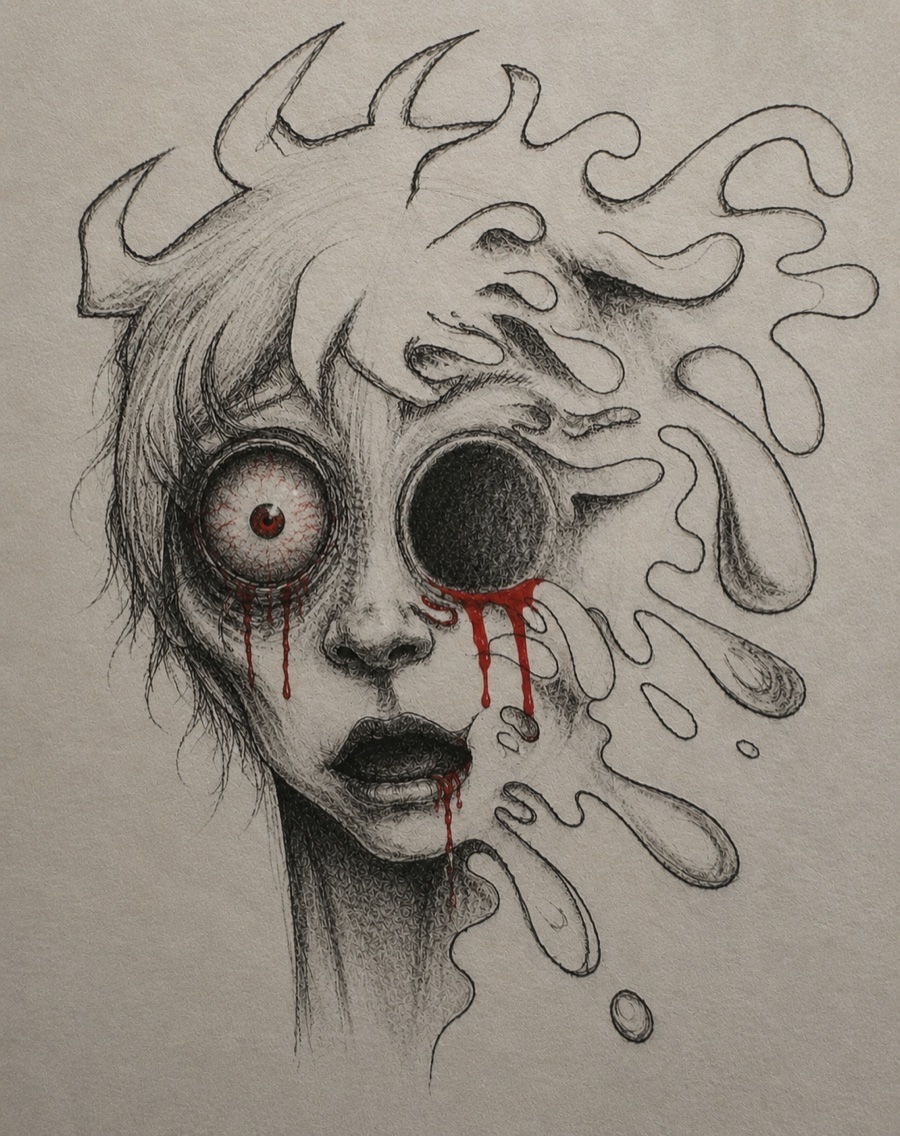
It knew my passwords. It could update the patient list, complete sign-out, and find the route home. It could answer the ordinary questions required to leave. The professional role continued moving through the hospital after the body had begun asking it to stop.
As long as the double remained recognizable, nobody needed to examine the substitution too closely.
Residency teaches the body that it is an unreliable subordinate.
It becomes something to overrule, caffeinate, feed when convenient, empty when possible, and keep moving until the work is finished. Hunger is not information. Pain is not information. Exhaustion is certainly not information.
They are interruptions.
The body does not exactly belong to the resident. It belongs first to the service.
We were almost proud of this.
We liked to imagine that we were carved out of wood.
Wood does not need sleep. It does not menstruate, become pregnant, develop a fever, require a dentist, or remember that it is overdue for a Pap smear. Wood does not ask to sit down. It remains where it has been placed and carries whatever weight is assigned to it.
I watched residents work through fevers, infections, and symptoms they dismissed as ordinary fatigue. Illness did not always feel sufficiently different from the baseline misery of call to announce itself clearly. A person could be genuinely unwell and assume she was simply failing to tolerate what everyone else seemed able to endure.
It took the COVID pandemic to make medicine confront something our bodies had been saying for years.
Working while sick was not necessarily an act of devotion. It could endanger the clinician, the team, and the patients whose care supposedly justified the sacrifice.
Before that, illness was often treated as a private inconvenience. The resident had to decide whether her body was sick enough to disrupt everyone else’s schedule, knowing that staying home meant placing the work directly into the hands of someone she cared about.
It took a contagious illness to teach us that the body was never suffering alone.
We left ourselves at the altar of surgery and called the offering professionalism.
The hospital never explicitly prohibited me from seeing a dentist, scheduling cervical cancer screening, or going to the hair salon. It simply consumed enough time that caring for myself became something to arrange in the margins.
In my junior years, those margins were narrow.
Months could pass without seeing my closest friends. My co-residents became family, not by blood, but certainly by sacrifice. We knew who had not slept, who needed food, who was quietly unraveling, and who could be trusted when the night turned strange.
There was love in that.
There was also captivity.
At morning sign-out, the list passed to someone whose day was beginning. The hospital reset itself. Fresh people entered. Cases started. Notes accumulated.
The body that carried the service through the night was sent away to recover in private.
I was fortunate to train in Boston, where I walked almost everywhere. I did not have to place my post-call body behind the wheel.
Many trainees do not have that protection. Some drive home after extended shifts. Others travel between hospitals while still responsible for patient care.
In a prospective study of 2,737 interns, the odds of reporting a motor vehicle crash after an extended shift were more than twice those following a nonextended shift. The odds of a near miss were almost six times higher. Each additional extended shift further increased the risk of a crash during the commute home.1
Boston allowed me to walk my fetch home.
Elsewhere, we hand the double a set of keys.
The fetch did not disappear when residency ended.
It learned to travel.
At Rio Mar Beach in Puerto Rico, my family expected us to be on vacation.
They had towels, sunscreen, drinks, and plans for an afternoon by the water.
I had a laptop.
The glare made the screen almost impossible to see, so I sat beneath a towel with the computer balanced in front of me, reviewing the week’s cases, finalizing the operating room schedule, and preparing for the work ahead while the Caribbean moved brightly around us.
At first, my family complained.
Eventually, they stopped.
They went swimming. They talked, laughed, ate, and continued having a vacation while they waited for me to return to mine. They had learned that the version of me sitting beneath the towel was physically present but still somewhere else.
My fetch was still in command.
The hospital had not followed me to the beach in any visible way. There was no pager ringing beside the water. No one stood over me demanding that the work be finished.
The work had simply learned to inhabit me.
My family learned not to wait.
They kept having fun until the version of me capable of joining them returned.
My body found other ways to record those years.
I gained weight. I ate quickly. I avoided fluids before long operations. I remained suspicious of any day that seemed too quiet, as though an unoccupied hour must have been overlooked by someone who would soon reclaim it.
Even during vacations, part of me remained tethered to the operating room. Case preparation entered the hotel room. The schedule crossed time zones. The work came to the beach.
The body remembers a schedule long after the schedule changes.
The fetch remembers the work even after the body has left the hospital.
During residency, I had my first and only baby.
I did not know then that there would not be another. I was not able to conceive again afterward, and I cannot know why. Human fertility does not offer a single explanation for every loss or unanswered hope.
Now, well into my forties, I sometimes wonder whether the accumulated stress of those years had anything to do with it. Whether the body that carried pregnancy, interrupted sleep, operating rooms, and the constant requirement to remain useful paid a price I did not understand at the time.
The literature cannot answer that question for me.
It can tell me that I am not alone in asking it.
In a national survey of 692 women surgeons, 65 percent reported delaying childbearing because of surgical training, nearly one quarter had used assisted reproductive technology, and 42 percent reported at least one pregnancy loss. Women surgeons also reported major pregnancy complications more often than the nonsurgeon partners used as a comparison group.2
Those findings cannot prove that surgical work caused any individual outcome. They reveal how often reproduction, loss, and continued professional performance occupy the same body.
The body can create a life and still be expected to arrive for rounds.
It can lose one and return before anyone notices what is missing.
I hear about colleagues navigating infertility, illness, and operations of their own after years spent bending themselves around operating tables and equipment. Every so often, another diagnosis travels quietly through the professional grapevine.
We are surprised each time.
Perhaps some part of us still believes we are made of wood.
Now perimenopause waits somewhere at the edge of the room. I approach it with curiosity, some apprehension, and the hope that my body will continue cooperating with the life I have built.
In a 2025 exploratory survey of 217 Canadian women physicians, nearly half reported severe menopausal symptom burden, and 40 percent believed the symptoms had negatively affected their work. Fewer than one in twenty had taken time away because of them.3
The study was small and self-selected, but the pattern is familiar.
The body speaks.
The physician continues working.
First the body is told it is too young to need anything.
Later it is told it is too experienced to falter.
I do not want to tell this story as though surgery destroyed my life.
It did not.
I remain healthy. My mind remains well. I still profoundly love this work. My residents are a joy to train. I am resilient to stress. I can do things that might fell someone else, although perhaps that is exactly the sort of thought people carved out of wood are trained to have.
I could stand to lose a stone or two.
I have also tried to live fully, sometimes with a determination that bordered on defiance.
Once, I finished a weekend of call, signed out the pager, and boarded a flight to Peru the following day. I arrived in Cusco and began acclimating for a trek through the Andes.
My lungs were unimpressed by my plans. Diamox did not persuade them. The mountains had no interest in my professional history of endurance.
There was one section called Las Siete Culebras, the Seven Serpents, where the trail wound steeply through a series of switchbacks.
I completed that portion on a donkey.
My husband completed it on foot, a distinction he has proudly and jokingly lorded over me ever since. In his telling, he completed the entire trek while I benefited from four-legged assistance during one of its most punishing sections.
He is technically correct, which has never prevented me from finding his account irritating.
We still completed the trek.
Part of that determination came from the same instinct that had taught me to override my body.
Keep moving. Ignore discomfort. Finish what you started.
But another part came from somewhere more alive.
I had spent years postponing life for the service. I was determined that the service would not be permitted to keep all of it.
Perhaps that is why the fetch remains the right creature for the post-call body.
It is not mindless. It is not necessarily monstrous.
It is recognizable.
It can work. It can travel. It can have a baby, trek most of a mountain, and sit beneath a towel on a Caribbean beach while building the next week’s operating room schedule.
It is convincing enough that other people may never know a substitution has occurred.
After enough years, we become skilled at producing the spectral double.
We learn how much coffee it needs. How little sleep. How to make its voice sound alert. How to stand still when the body beneath the gown is aching. How to say “I’m fine” in a tone that closes the subject.
We called it resilience when the double became convincing.
I do not regret becoming a surgeon. I do not wish to surrender the discipline, endurance, or strange competence those years gave me.
But I have become less willing to pretend that strength arrives without a bill.
The cost is not always catastrophe. Sometimes it is a friend you have not seen in months. A health appointment delayed again. A family that has learned to begin the vacation without you. A body whose warnings have become so familiar that they fade into ambient noise.
Sometimes it is a line of m’s crossing a presentation slide after consciousness has already departed.
The post-call resident finishes sign-out and steps into morning. Around her, the hospital is assembling itself for another day. She finds her Yeti mug and pulls on the Department of Urology fleece she received on Thank a Resident Day, then gathers whatever remains of the person who entered the building the morning before.
In the old stories, seeing the fetch was an omen that death was near.
In residency, we saw ours every morning and called it sign-out.
Sources
- Barger LK, Cade BE, Ayas NT, et al. Extended Work Shifts and the Risk of Motor Vehicle Crashes Among Interns. New England Journal of Medicine. 2005;352(2):125-134. doi:10.1056/NEJMoa041401.
- Rangel EL, Castillo-Angeles M, Easter SR, et al. Incidence of Infertility and Pregnancy Complications in US Female Surgeons. JAMA Surgery. 2021;156(10):905-915. doi:10.1001/jamasurg.2021.3301.
- Brent SE, Shirreff L, Yanchar NL, Christakis M. Workplace Impact of Menopause Symptoms Among Canadian Women Physicians. Healthcare. 2025;13(21):2699. doi:10.3390/healthcare13212699.